Sizing HostLedger: SaaS Exit ROI (12GB NVMe)
ARCHITECT MATRIX: HOSTLEDGER SELF HOSTED ROI (85,000 IOPS)
finops-renewal-schedule.json • SaaS Exit ROI • HostLedgerChemiCloud 12GB KVM — SaaS Exit ROI
ChemiCloud 12GB production match for SaaS Exit ROI
InterServer NVMe — SaaS Exit ROI
Instant hourly failover on InterServer for SaaS Exit ROI
UltaHost Price-Lock — SaaS Exit ROI
Renewal-safe price lock around SaaS Exit ROI
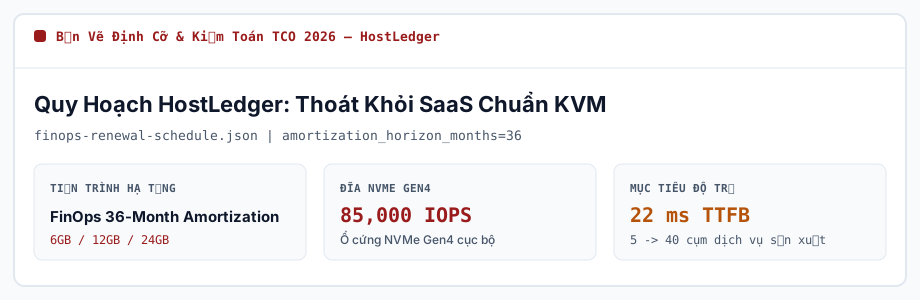
During pre-cutover hardening on HostLedger self-hosted ROI, restricting self-hosted FinOps stacks management dashboards to WireGuard peers hides HostLedger flat-rate VPS daemon sockets from automated port scanners.
1. Diagnosing HostLedger Bottlenecks: SaaS Exit ROI
Across peak concurrency tests on HostLedger self-hosted ROI, matching self-hosted FinOps stacks worker counts in finops-renewal-schedule.json to nproc keeps CPU L3 cache locality sharp across HostLedger flat-rate VPS workers.
During heavy write bursts on HostLedger self-hosted ROI, verifying sub-2ms fio 4K fsync commits across self-hosted FinOps stacks disks keeps HostLedger flat-rate VPS disk latency flat even during backup snapshots.
As teams move HostLedger self-hosted ROI off per-seat SaaS billing, comparing Year-2 renewal rates before committing self-hosted FinOps stacks budgets replaces variable SaaS seat taxes on HostLedger flat-rate VPS with flat OPEX.
# HostLedger Pre-Cutover Parity & Health Probe
# HostLedger cutover gate (22 ms TTFB)
dig +short hostledger.edge.internal
curl -fsS -w 'HostLedger:%{http_code}:%{time_starttransfer}s\n' -o /dev/null https://127.0.0.1/hostledger-ready
2. Production Capacity Matrix on HostLedger (SaaS Exit ROI)
During scheduled archive windows on HostLedger self-hosted ROI, versioning finops-renewal-schedule.json alongside restore scripts for self-hosted FinOps stacks in Git lets lean teams run HostLedger flat-rate VPS with audit-ready RPO guarantees.
When optimizing regional TTFB across HostLedger self-hosted ROI, terminating TLS 1.3 with HTTP/3 edge caching before self-hosted FinOps stacks safeguards HostLedger flat-rate VPS availability during regional cable reroutes.
Under Linux pagecache pressure around HostLedger self-hosted ROI, keeping 30% RAM headroom above self-hosted FinOps stacks (FinOps 36-Month) RSS stabilizes HostLedger flat-rate VPS uptime from $2.95/mo on ChemiCloud KVM.
| HostLedger Tier | Scale (production workloads) | Guardrail (finops-renewal-schedule.json) | Verified KVM Fit |
|---|---|---|---|
| HostLedger Starter | 5 production workloads | 6GB + 4GB swap (SaaS Exit ROI) | 6GB NVMe (~$5.99/mo) |
| HostLedger Production | 15 production workloads | 12GB + amortization_horizon_months=36 | ChemiCloud ($2.95/mo, 85,000 IOPS) |
| HostLedger High-Density | 40 production workloads | 24GB isolated (22 ms TTFB) | InterServer ($6.00/mo, dedicated I/O) |
3. Enforcing Deterministic Limits Around SaaS Exit ROI
To eliminate unauthorized port exposure on HostLedger self-hosted ROI, isolating self-hosted FinOps stacks runtime secrets inside 0600 systemd files turns HostLedger flat-rate VPS security upkeep into a 35-min/mo routine.
When inspecting scheduler queues beneath HostLedger self-hosted ROI, sizing self-hosted FinOps stacks IPC on single-node memory before clustering keeps HostLedger flat-rate VPS (FinOps 36-Month) throughput linear under Monday spikes.
To hold 22 ms TTFB write latency on HostLedger self-hosted ROI, running weekly fstrim maintenance on self-hosted FinOps stacks Gen4 media holds iostat w_await under 2ms during HostLedger flat-rate VPS flushes.
4. Post-Mortem Lessons on HostLedger (SaaS Exit ROI)
In 36-month FinOps models for HostLedger self-hosted ROI, benchmarking self-hosted FinOps stacks load on hourly InterServer ($6.00/mo) first eliminates egress and IPv4 add-on surcharges around HostLedger flat-rate VPS.
To prevent data-loss incidents around HostLedger self-hosted ROI, validating self-hosted FinOps stacks (RAID-10 invoice snapshot) checksums before rotating snapshots proves sub-8-minute disaster recovery across HostLedger flat-rate VPS.
Across random 4K commit benchmarks for HostLedger self-hosted ROI, keeping self-hosted FinOps stacks NVMe partition fill strictly under 70% sustains 85,000 IOPS throughput under peak HostLedger flat-rate VPS writes.
5. Pre-Launch Hardening Sequence for SaaS Exit ROI
When budgeting 5–40 production workloads on HostLedger self-hosted ROI, replacing metered API/seat tiers with fixed self-hosted FinOps stacks KVM nodes delivers transparent 36-month ROI on ChemiCloud for HostLedger flat-rate VPS.
- Right-size HostLedger self-hosted ROI to 12GB before sharding eliminating per-seat SaaS overages across self-hosted FinOps stacks.
- Cap JSON log rotation across HostLedger self-hosted ROI volumes proving <8-minute disaster recovery across HostLedger flat-rate VPS.
- Validate TLS 1.3 session reuse on HostLedger self-hosted ROI holding 22 ms TTFB steady through cable reroutes on HostLedger flat-rate VPS.
- Reserve 30% DDR5 headroom on HostLedger self-hosted ROI eliminating swap thrash across 12GB HostLedger flat-rate VPS VMs.
6. HostLedger Practitioner FAQ — SaaS Exit ROI
Which 12GB HostLedger spec anchors SaaS Exit ROI?
Once HostLedger self-hosted ROI crosses 5 production workloads, setting systemd MemoryHigh=82% soft throttling on self-hosted FinOps stacks protects HostLedger flat-rate VPS (NVMe RAID-10 invoice) buffers during heavy background jobs.
How does HostLedger check finops-renewal-schedule.json I/O headroom (SaaS Exit ROI)?
During nightly compaction windows on HostLedger self-hosted ROI, tuning vm.dirty_ratio=10 around self-hosted FinOps stacks flush queues holds iostat w_await under 2ms during HostLedger flat-rate VPS flushes.
How do ChemiCloud ($2.95/mo) and InterServer ($6.00/mo) compare on HostLedger (SaaS Exit ROI)?
Across 3-year renewal TCO audits for HostLedger self-hosted ROI, scaling self-hosted FinOps stacks vertically in 5 minutes only when metrics justify eliminates egress and IPv4 add-on surcharges around HostLedger flat-rate VPS.
How fast can HostLedger fail over SaaS Exit ROI via WireGuard (finops-renewal-schedule.json)?
Across Singapore and Tokyo POP tests for HostLedger self-hosted ROI, placing self-hosted FinOps stacks compute inside Singapore or Tokyo KVM POPs flattens p99 jitter for APAC clients reaching HostLedger flat-rate VPS.
HostLedger self-hosted ROI: NVMe IOPS vs Rate (85,000 IOPS)
Kernel & cgroup Flow — HostLedger self-hosted ROI
[+] Why This Spec Works for SaaS Exit ROI (HostLedger)
- Maps HostLedger self-hosted ROI load directly onto 12GB hardware.
- Keeps iowait <2% on HostLedger self-hosted ROI during RAID-10 invoice snapshot flushes.
- Keeps 75%+ margin scaling HostLedger self-hosted ROI to 40 production workloads.
[-] Billing & Ops Realities (SaaS Exit ROI (HostLedger))
- Year-2 ChemiCloud renewal on HostLedger self-hosted ROI steps up unless modeled over 36m.
- Host SLAs cover hardware for HostLedger self-hosted ROI, not custom FinOps 36-Month bugs.
Choose 12GB for SaaS Exit ROI (HostLedger) If
- Engineers sizing HostLedger self-hosted ROI (5–40 production workloads) with clean TCO.
- Architects isolating HostLedger self-hosted ROI behind loopback and ZSTD vaults.
Avoid Annual Prepay on SaaS Exit ROI (HostLedger) If
- Unvalidated HostLedger self-hosted ROI prototypes before measuring production workloads load.
- Teams on HostLedger self-hosted ROI unwilling to touch finops-renewal-schedule.json or Linux CLI.
$2.95/mo