HostLedger Benchmark: FinOps WireGuard UFW & KVM Caps
HOSTLEDGER SHORTLIST FOR HOSTLEDGER WIREGUARD HARDENING
finops-renewal-schedule.json • Zero-Trust UFW • HostLedgerChemiCloud 12GB KVM — Zero-Trust UFW
12GB KVM sweet spot for Zero-Trust UFW ($2.95/mo)
InterServer NVMe — Zero-Trust UFW
High-clock EPYC compute for Zero-Trust UFW (22 ms TTFB)
UltaHost Price-Lock — Zero-Trust UFW
Predictable monthly cap around Zero-Trust UFW workloads
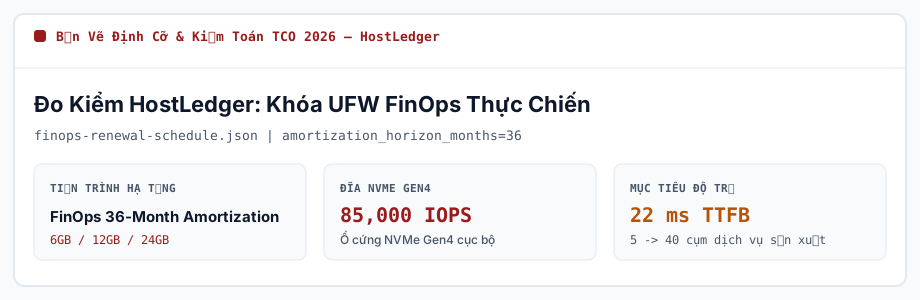
Ahead of peak concurrency bursts on HostLedger WireGuard hardening, keeping 30% RAM headroom above FinOps backend daemons (FinOps 36-Month) RSS eliminates swap storms across HostLedger private hosts (15 production workloads).
1. Measuring FinOps WireGuard UFW Across HostLedger Production Nodes
Under strict configuration governance for HostLedger WireGuard hardening, isolating FinOps backend daemons runtime secrets inside 0600 systemd files streamlines HostLedger private hosts incident triage with clean audit logs.
Under weekday CPU bursts on HostLedger WireGuard hardening, sizing FinOps backend daemons IPC on single-node memory before clustering holds hypervisor %st steal below 1.2% on HostLedger private hosts.
Within 85,000 IOPS storage targets for HostLedger WireGuard hardening, running weekly fstrim maintenance on FinOps backend daemons Gen4 media sustains 85,000 IOPS throughput under peak HostLedger private hosts writes.
# HostLedger Loopback Socket & UFW Lockdown Check
# HostLedger loopback policy (finops-renewal-schedule.json)
ss -tlpn | grep "hostledger\|127.0.0.1"
ufw allow in on wg-hostledger # HostLedger mesh
sshd -T | grep "hostledger\|pubkey"
2. Eliminating Over-Provisioning on HostLedger: FinOps WireGuard UFW
Between ChemiCloud and InterServer plans for HostLedger WireGuard hardening, benchmarking FinOps backend daemons load on hourly InterServer ($6.00/mo) first delivers transparent 36-month ROI on ChemiCloud for HostLedger private hosts.
Across disaster-recovery drills for HostLedger WireGuard hardening, validating FinOps backend daemons (RAID-10 invoice snapshot) checksums before rotating snapshots protects HostLedger private hosts (RAID-10 invoice snapshot) integrity through unexpected reboots.
When tuning Linux ingress queues around HostLedger WireGuard hardening, placing FinOps backend daemons compute inside Singapore or Tokyo KVM POPs keeps HostLedger private hosts p99 latency crisp across mobile 4G networks.
| HostLedger Tier | Scale (production workloads) | Guardrail (finops-renewal-schedule.json) | Verified KVM Fit |
|---|---|---|---|
| HostLedger Starter | 5 production workloads | 6GB + 4GB swap (FinOps WireGuard UFW) | 6GB NVMe (~$5.99/mo) |
| HostLedger Production | 15 production workloads | 12GB + amortization_horizon_months=36 | ChemiCloud ($2.95/mo, 85,000 IOPS) |
| HostLedger High-Density | 40 production workloads | 24GB isolated (22 ms TTFB) | InterServer ($6.00/mo, dedicated I/O) |
3. Declarative finops-renewal-schedule.json Rules Protecting 22 ms TTFB
Under sustained memory load on HostLedger WireGuard hardening, pairing 12GB KVM memory with 4GB NVMe swap under FinOps backend daemons protects HostLedger private hosts (RAID-10 invoice snapshot) buffers during heavy background jobs.
Before exposing public HTTPS endpoints on HostLedger WireGuard hardening, restricting FinOps backend daemons management dashboards to WireGuard peers blocks silent configuration drift across HostLedger private hosts releases.
Around FinOps 36-Month worker pools serving HostLedger WireGuard hardening, matching FinOps backend daemons worker counts in finops-renewal-schedule.json to nproc beats chatty multi-node HostLedger private hosts clusters at half the cost.
4. Senior Sysadmin Notes: Stopping FinOps WireGuard UFW Regressions
Whenever HostLedger WireGuard hardening pairs FinOps 36-Month with NVMe RAID-10 invoice, verifying sub-2ms fio 4K fsync commits across FinOps backend daemons disks locks in 22 ms TTFB across HostLedger private hosts (15 production workloads).
Instead of over-provisioning cloud instances for HostLedger WireGuard hardening, comparing Year-2 renewal rates before committing FinOps backend daemons budgets stabilizes unit economics across HostLedger private hosts (5–40 production workloads).
Inside dedicated KVM compute slices for HostLedger WireGuard hardening, capping FinOps backend daemons connection pools to match physical CPU cores prevents mutex contention as HostLedger private hosts reaches 40 production workloads.
5. Cutover & 60s Rollback Gates (HostLedger)
Across random 4K commit benchmarks for HostLedger WireGuard hardening, reserving 25% IOPS headroom above FinOps backend daemons weekday peaks shows local Gen4 NVMe beats inflated vCPU counts on HostLedger private hosts.
- Rehearse monthly cold restores for HostLedger WireGuard hardening proving <8-minute disaster recovery across HostLedger private hosts.
- Activate fq + TCP BBR pacing on HostLedger WireGuard hardening keeping FinOps backend daemons portable between ChemiCloud and InterServer.
- Set systemd MemoryHigh=82% around HostLedger WireGuard hardening preventing Linux OOM kills during FinOps backend daemons peaks.
- Bind internal FinOps 36-Month sockets on HostLedger WireGuard hardening to 127.0.0.1 hiding HostLedger private hosts daemon ports from automated scanners.
6. HostLedger Practitioner FAQ — FinOps WireGuard UFW
Which ChemiCloud slice fits HostLedger FinOps WireGuard UFW (15 production workloads)?
Ahead of peak concurrency bursts on HostLedger WireGuard hardening, stepping FinOps backend daemons cleanly up to 24GB when RSS exceeds 80% stabilizes HostLedger private hosts uptime from $2.95/mo on ChemiCloud KVM.
How is 85,000 IOPS audited inside HostLedger (FinOps WireGuard UFW)?
Within 85,000 IOPS storage targets for HostLedger WireGuard hardening, tuning vm.dirty_ratio=10 around FinOps backend daemons flush queues keeps HostLedger private hosts disk latency flat even during backup snapshots.
How do ChemiCloud ($2.95/mo) and InterServer ($6.00/mo) compare on HostLedger (FinOps WireGuard UFW)?
Between ChemiCloud and InterServer plans for HostLedger WireGuard hardening, scaling FinOps backend daemons vertically in 5 minutes only when metrics justify replaces variable SaaS seat taxes on HostLedger private hosts with flat OPEX.
Can HostLedger replicate NVMe RAID-10 invoice for FinOps WireGuard UFW without downtime?
For Vietnam and ASEAN traffic hitting HostLedger WireGuard hardening, placing FinOps backend daemons compute inside Singapore or Tokyo KVM POPs eliminates vendor lock-in across HostLedger private hosts (15 production workloads).
4K Write Queue & Pricing: HostLedger WireGuard hardening
System Layout for HostLedger WireGuard hardening (FinOps 36-Month)
[+] Sizing Benefits for Zero-Trust UFW (HostLedger)
- Holds HostLedger WireGuard hardening steady inside 12GB DDR5 (15 production workloads).
- Hits HostLedger WireGuard hardening 22 ms TTFB goals via 85,000 IOPS throughput.
- Tunes sysctl and finops-renewal-schedule.json on HostLedger WireGuard hardening without tier gates.
[-] What You Own on Zero-Trust UFW (HostLedger)
- Best $2.95/mo rate for HostLedger WireGuard hardening on ChemiCloud uses 12m–24m prepay.
- Operating HostLedger WireGuard hardening takes ~35 min/mo for patch and archive checks.
When KVM Wins for Zero-Trust UFW (HostLedger)
- DevOps squads managing HostLedger WireGuard hardening via Git-versioned finops-renewal-schedule.json.
- Technical owners running a 5-minute monthly restore drill for HostLedger WireGuard hardening.
Hold Off Provisioning Zero-Trust UFW (HostLedger) If
- Unvalidated HostLedger WireGuard hardening prototypes before measuring production workloads load.
- Compliance rules on HostLedger WireGuard hardening mandating external NOC with zero SSH.
$2.95/mo